

Article #17
Healthy People, Healthy Communities
Menopause: Recognizing the Signs, Knowing Your Options
In this Empowering the Citizen Patient article, retired family physician Dr. Mindy Smith looks at the signs and symptoms of perimenopause and menopause, why some may be easy to miss or misunderstood, and the treatment options that can help make the transition easier.
Of the many changes that women go through during their lives, few are as confusing as the experience of menopause and the time leading up to it.
For generations, menopause was something women were largely expected to put up with. Its symptoms were often poorly understood, inadequately researched or minimized. Even today, women are reluctant to seek help for disrupted sleep, mood changes, brain fog, or other menopausal symptoms that can be managed.
Thankfully, things are changing. Strong advocacy from organizations such as the Menopause Foundation of Canada is helping push for better information, research and care.
Menopause is a natural life occurrence. But “natural” does not mean easy. For some women, the transition is relatively smooth. For others, symptoms can affect sleep, work, relationships, sexual health and quality of life.
What’s Happening?
Menopause happens when the ovaries stop releasing eggs and levels of estrogen and progesterone fall. Periods eventually stop and fertility ends.
Most women reach menopause between their late 40s and mid-50s. It can also happen earlier after surgery to remove the ovaries, chemotherapy or radiation.
Perimenopause is the transition leading up to menopause. It commonly lasts several years and is often when symptoms begin and periods become irregular. Menopause itself is diagnosed after 12 months without a menstrual period.
For most women over 45 with typical symptoms and changing periods, the menopause transition is diagnosed from symptoms and menstrual history rather than blood tests. Hormone levels fluctuate during perimenopause, so testing does not provide useful information. Testing can be useful when menopause occurs unusually early or when the diagnosis is uncertain.
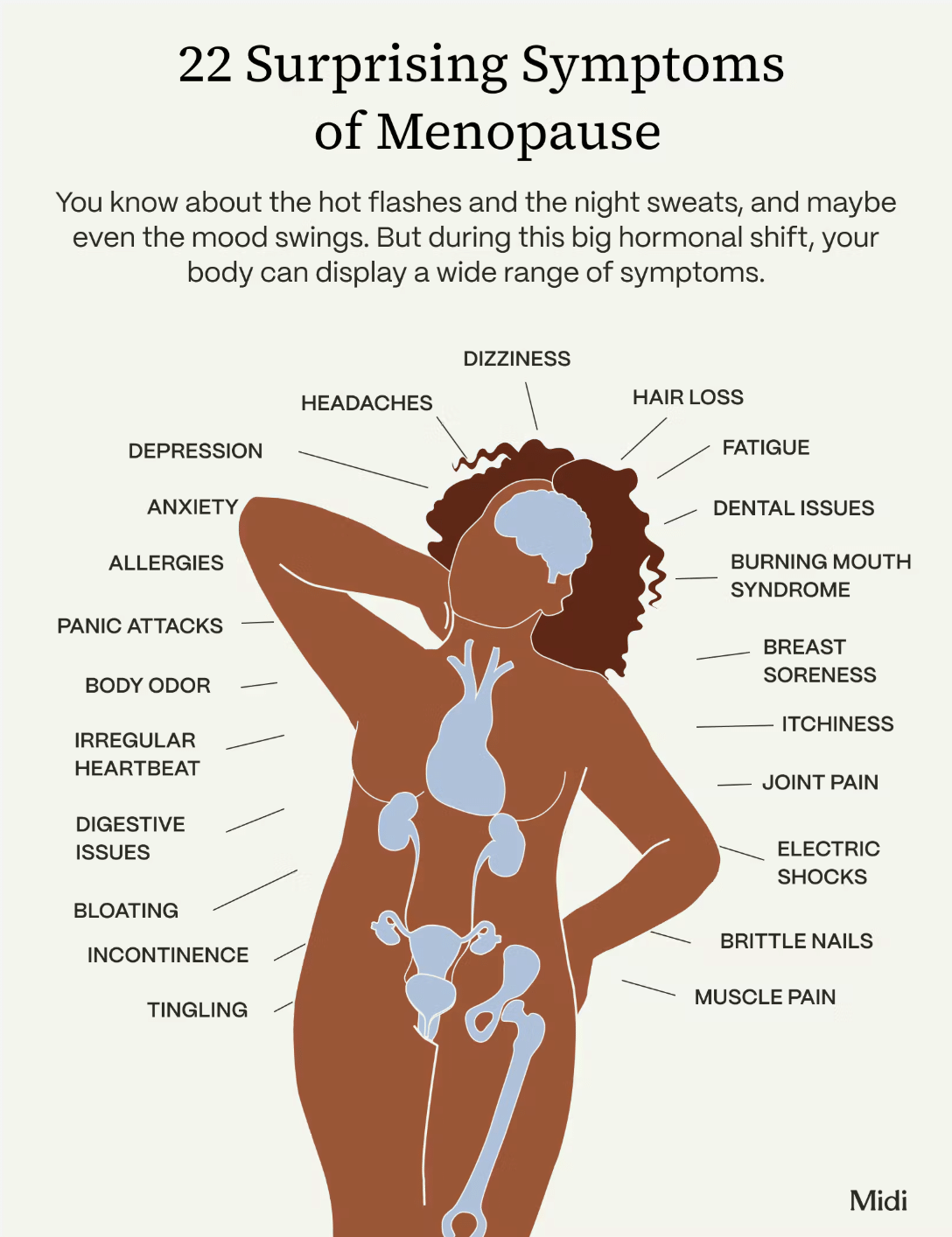
Menopause is more than hot flashes
Hot flashes and night sweats are among the best-known symptoms. A hot flash can cause sudden heat in the face, neck or chest, sometimes with sweating, flushing, chills, anxiety or a racing heart. At night, these episodes can seriously disrupt sleep.
Personally, my first year of hot flashes was terrible. I slept with a towel beside me so I could dry off after waking soaked during the night. Over time, they became shorter and easier to tolerate.
As estrogen levels change during perimenopause and menopause, vaginal and urinary tissues can become thinner and drier, leading to vaginal dryness, discomfort during sex, urinary incontinence (i.e., leaking) and recurrent urinary tract infections.
Not every symptom experienced at this stage of life is caused by menopause, but neither should these experiences be dismissed as stress, aging or something women simply have to live with.
Treatment / Therapy Choices
The familiar term Hormone Replacement Therapy (HRT) is now more often called Menopausal Hormone Therapy (MHT), reflecting menopause as a natural life stage rather than a hormone deficiency. MHT is the most effective treatment for hot flashes and night sweats. It usually involves estrogen, with a progestogen added for women who still have a uterus. It can be taken as tablets, patches, gels or vaginal preparations. Vaginal estrogen is particularly effective for vaginal and urinary symptoms.
Like any medication, MHT has benefits and risks (Table 1). For many women who are under 60 or within about 10 years of menopause the benefits may outweigh the relatively small absolute risks. Women with additional risk factors for breast cancer or heart disease can work with their healthcare provider to decide whether MHT is right for them. Women who have experienced loss of ovarian function before age 45 years should also consider MHT until the average age of menopause.

Decision-support tools such as MQ6 can help women and their healthcare providers consider individual risks and options.
Finding the right treatment may take some adjustment. The dose and type are guided by symptom relief, side effects, and medical history. There is no single age when every woman needs to stop MHT, but the dose, route, benefits and risks should be reviewed regularly.
How MHT is taken can also affect risk and side effects. Estrogen delivered through the skin, such as a patch, may carry a lower risk of blood clots than oral estrogen. Micronized progesterone is often better tolerated than some other forms of progestogen. Some women taking systemic MHT may also need vaginal estrogen for vaginal or urinary symptoms.
“Bioidentical” hormones are sometimes promoted as safer or more natural, but there is no evidence that custom-made versions work better or are lower risk than approved hormone treatments (two of which, estrace and prometrium, are bioidentical).
Hormones are not the only option (Table 2). Certain antidepressants, gabapentin and newer medications can reduce hot flashes; these may be especially helpful for breast cancer survivors. Cognitive behavioural therapy may also help with hot flashes and sleep. Vaginal moisturizers and lubricants can help with vaginal dryness or discomfort. Women may wish to work with a cultural leader for traditional therapies.
Lifestyle measures may help as well (see article 6!). Regular exercise, healthy eating and paying attention to sleep are worthwhile for overall health during and after menopause. Some women may find benefit from fermented soybean extract, mindfulness, and acupuncture. Benefits of herbal products are uncertain.
Start the conversation
Many women have endured symptoms quietly, felt embarrassed by a hot flash in public, wondered why their sleep or body changed, or worried that brain fog meant something more serious.
If symptoms are affecting your sleep, work, relationships, sexual health or quality of life, bring them up with your healthcare provider. Ask what treatment options are available, what their benefits and risks are for you, and whether menopause could be contributing.
Menopause may be a normal transition. Suffering through it in silence should not be.

Get the articles direct to your inbox!